
How Long Does Melatonin Stay in Your System? Understanding Melatonin's Duration and Effects
Posted by Vitasunn on 28 May 2025

Key Takeaways
- Melatonin usually remains in your system for 4 to 8 hours, depending on dose and formulation.
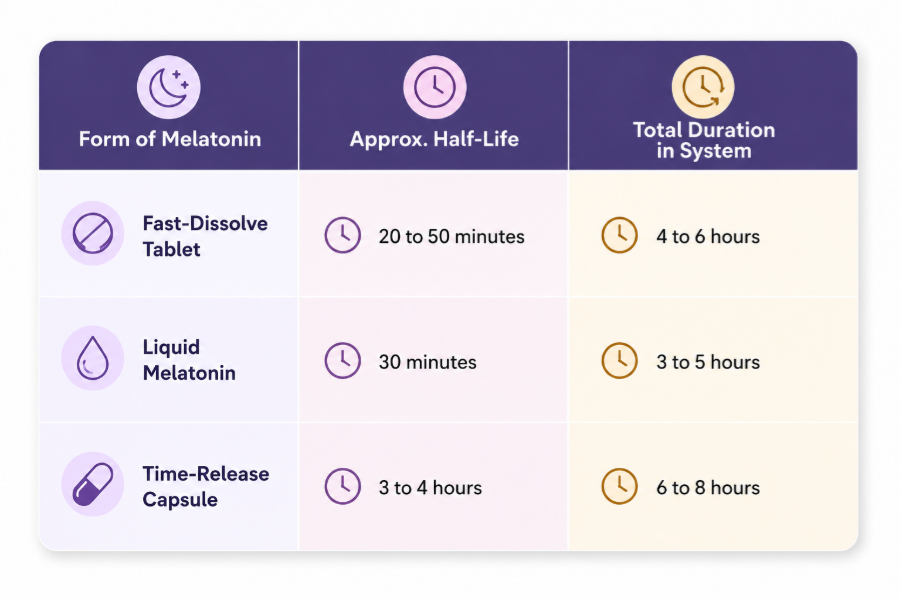
- Immediate-release forms have a half-life of about 20 to 50 minutes.
- Timed release melatonin can stay active for 6 to 8 hours through the night.
- How long does melatonin last also depends on age, liver function, and whether you took it with food.
- A higher dose does not clear faster and mainly raises the risk of next-morning grogginess.
- Melatonin does not appear to build up in your body with nightly use.
Melatonin typically stays in your system for 4 to 8 hours, depending on your dose, your age, and the type of supplement you're taking. Fast-dissolve versions clear out quickly, while time-release formulas let go more slowly, stretching their effect through the night.
But that number doesn't tell the whole story. Walk down any pharmacy aisle, and the melatonin shelf is full of options. Tablets, drops, gummies, and timed-release capsules, all promising a better night's sleep.
Yet the same dose can leave one person clear-headed and another groggy well past breakfast, which is exactly why so many people find themselves wondering why they still feel it the next morning or why it seems to wear off too soon. How long does melatonin last isn't a fixed number. It changes from person to person, and figuring out why is the first step to sleeping better without the grogginess.
Table Of Contents
- What Is Melatonin?
- What Determines How Long Melatonin Lasts?
- How Your Body Processes Melatonin
- Melatonin Half-Life, Immediate vs. Time-Release
- Melatonin Half-Life By Dose
- Immediate-Release vs Extended-Release Melatonin
- How Long Before Melatonin Kicks In
- How To Avoid Grogginess From Melatonin
- Does Melatonin Build Up If You Take It Every Night
- Magnesium And Melatonin For Sleep
- Frequently Asked Questions
- Make Melatonin Work For Your Sleep Schedule
What Is Melatonin?

Melatonin is a hormone your pineal gland makes on its own once it gets dark outside. It's like a body's nighttime signal, rising in the evening, falling back off toward morning, quietly setting your circadian rhythm along the way.
Natural melatonin levels usually peak around midnight in healthy adults, then drop off as you get older. The supplement version works differently. It's a man-made or plant-based copy of the same hormone, sold over the counter for occasional sleeplessness, jet lag, and shift work.
What Determines How Long Melatonin Lasts?
There are a number of factors that can affect how long melatonin stays in your body.
- The dose: Higher doses of melatonin may take longer to clear.
- Type of supplement: Extended release melatonin may have longer-lasting effects, while quick dissolve or liquid forms may be metabolized more quickly.
- Age and metabolic rate: Older people or those with a slower metabolism may process it more slowly.
- When you take it: Taking melatonin later in the night can affect your alertness levels the next morning.
- Liver function: Most melatonin metabolism occurs via the CYP1A2 enzyme in your liver, so lower liver function can result in melatonin remaining active longer.
- Food intake: Taking melatonin with a heavy meal can slow absorption and delay the onset of action.
Research from the National Library of Medicine has found that melatonin has a relatively short half-life, ranging from 20 to 50 minutes for immediate-release forms. This means your body processes half the dose in under an hour. However, time-release formulations can extend melatonin levels in the bloodstream for up to 6-8 hours, supporting sleep maintenance throughout the night.
How Your Body Processes Melatonin
Melatonin is primarily metabolized by the liver enzyme CYP1A2, which degrades melatonin and prepares it for excretion. Following supplement ingestion, blood melatonin levels climb rapidly, typically peaking within 60 minutes and then beginning to fall.
Total clearance varies, but in most people melatonin is undetectable by morning, particularly with lower doses. According to a systematic review published in the journal Sleep Medicine Reviews, melatonin’s effectiveness depends not only on its duration in the body but also on how closely the release profile corresponds to the user’s circadian rhythm. That's why matching the right format to your sleep goals is important.
Total melatonin duration in the body also depends heavily on how much of the dose your gut absorbs. That range is bigger than most people expect. Oral bioavailability runs anywhere from about 1 percent to 74 percent depending on the formulation and dose, and most of what does reach your bloodstream binds to albumin before your liver clears out the rest.
Melatonin Half-Life, Immediate vs. Time-Release
Immediate-release and time-release melatonin don't just start working at different points; they clear out of your system at different rates too. Melatonin half-life and total duration change a lot by format.
Melatonin Half-Life By Dose
Melatonin half-life is just a way of describing how long it takes your body to clear half of a given dose, and it happens to be the simplest way to answer when does melatonin wear off for most people.
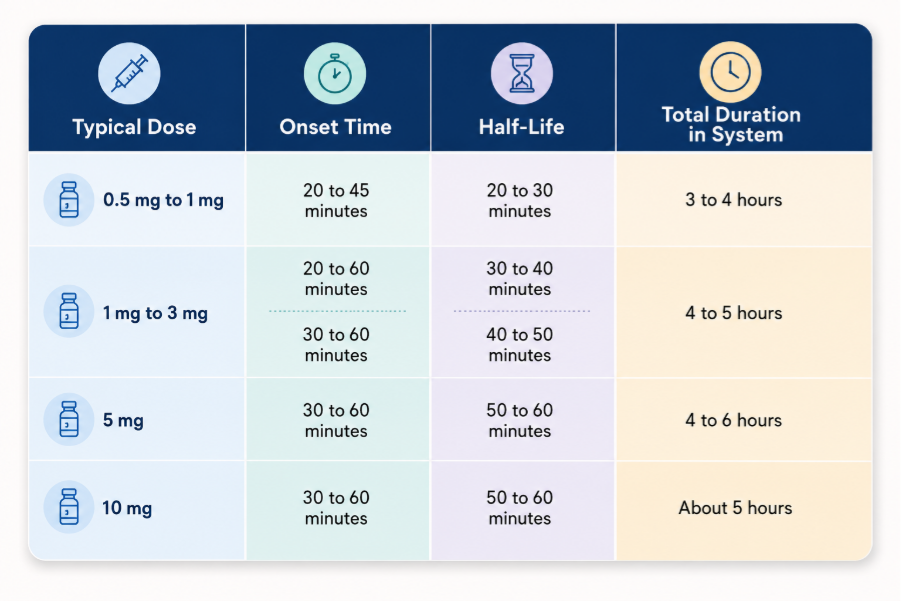
These figures are averages pulled from clinical pharmacokinetic research, so individual results will vary by age, metabolism, and weight. One study even found that melatonin levels dropped to zero about five hours after a 10 mg dose, according to the Sleep Foundation.
Immediate-Release vs Extended-Release Melatonin
Immediate-release melatonin dissolves fast and raises blood levels within about an hour, which makes it a preferred choice if falling asleep is your main issue.
Extended-release and timed release melatonin work differently. They release the hormone gradually, mimicking your body's own overnight pattern, which helps more if you fall asleep just fine but keep waking up partway through the night.
One study on older adults found that a combined fast and extended-release formulation kept melatonin levels raised for close to 10 hours, far longer than a standard immediate-release dose alone. So, pick immediate-release if you need help falling asleep, extended-release if staying asleep is the problem.
How Long Before Melatonin Kicks In

Fast-dissolve tablets and liquid drops act within 20 to 45 minutes. Standard capsules take a bit longer, 20 to 60 minutes. Extended-release and timed release melatonin build up more gradually, over one to two hours, since that slower onset is exactly what lets them last through the night.
Onset time and how long does melatonin last are two different questions, even though people mix them up constantly. Most experts recommend taking melatonin 30 to 60 minutes before bedtime, though that window shifts earlier if you're dealing with jet lag or shift work.
How to Avoid Grogginess from Melatonin
The most common side effect associated with lingering melatonin is next-morning drowsiness, especially when taken at high doses or at the wrong time of night. Here's how to reduce that risk.
- Take melatonin 30 to 60 minutes before your planned bedtime.
- Use lower doses (1 to 3mg) unless you've been advised to go higher.
- Avoid taking melatonin after midnight, as it may shift your internal clock in the wrong direction.
- Use time-release only if your issue is staying asleep, not falling asleep.
Melatonin isn't a fit for everyone. Pregnant or nursing women, people with autoimmune conditions or immune-system cancers, and anyone taking medication that could interact with melatonin should check with a doctor before adding it to their routine.
Does Melatonin Build Up If You Take It Every Night?
Does melatonin build up in your system if taken nightly? It's a common worry, but research doesn't really back it up. Melatonin has a short half-life. That means most of each dose clears out of your system before the next dose even arrives, so it does not build up in your body. How long does melatonin last on any given night has little to do with whether it piles up over weeks of use.
A national survey tracked by the NIH found that melatonin use among adults rose more than fivefold between 1999 and 2018. Some commercial supplements, it turns out, contain far more melatonin than their label states.
Short-term nightly use looks safe for most healthy adults, though it's worth checking with a doctor before relying on it every night for more than 4 weeks. The bigger factor for taking melatonin every night long term is dose and duration, not whether melatonin builds up.
Magnesium and Melatonin for Sleep

Magnesium and melatonin get paired together a lot, but they're doing two entirely different jobs. Melatonin acts as a timing signal, telling your body when nighttime has arrived. Magnesium is more about relaxation, easing muscles and calming the nervous system so it's easier to unwind once melatonin has already nudged you toward sleep.
Taking both together won't change how long does melatonin last. What it can do is help if part of your sleep trouble comes from a wound-up nervous system, not just a mistimed body clock.
Make Melatonin Work for Your Sleep Schedule
Melatonin typically stays in your system for 4 to 8 hours, depending on how much you take and the supplement type. Knowing how your body processes melatonin and choosing the correct product for your sleep issues can help you fall asleep faster, sleep more deeply and wake up feeling refreshed.
Once you know your melatonin effects timeline, matching a product to your situation takes minutes, not the usual trial and error. When you're ready to choose, shop Vitasunn's fast-dissolve, timed release, and liquid melatonin options and pick the dose and format that fits your sleep schedule.
FAQs
How long does melatonin take to start working?
Most people feel its effects within 20 to 60 minutes, faster with fast-dissolve tablets.
How long does melatonin stay in your bloodstream?
It's really about half-life. How long does melatonin last in your bloodstream depends directly on that half-life. Immediate-release forms clear in four to five hours, while timed release melatonin takes six hours or more.
Does the dose (1mg vs 5mg vs 10mg) change how long melatonin lasts?
Generally yes, the higher the dose, the longer it will take to clear. The 10 mg dose has been shown to clear in about five hours, with lower doses (1 to 3 mg) running a few hours less.
Why do I feel groggy the morning after taking melatonin?
Usually from too high a dose, taking it too late, or using timed release when you only needed help falling asleep.
Does melatonin build up in your system if taken nightly?
Not really. No meaningful buildup shows up in research, since its short half-life clears most of each dose before the next.
Does age or metabolism affect how long melatonin lasts?
Yes. Older adults tend to clear melatonin more slowly, since both production and liver metabolism decline with age.